

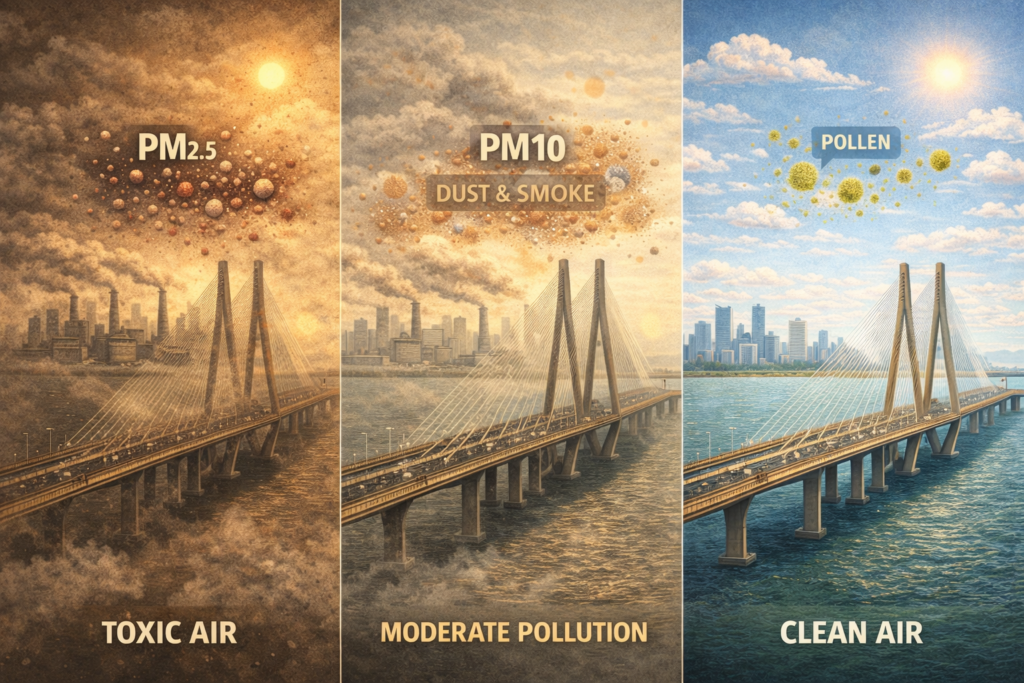
Most health risks announce themselves clearly. Pain, breathlessness, fatigue – signals that tell us something is wrong. Air pollution doesn’t work that way. It rarely causes immediate symptoms, which is why it’s easy to dismiss. Yet over time, it may be one of the most powerful forces shaping how we age and how long we remain healthy.
We often treat air quality as an environmental or seasonal issue. Biologically, however, it behaves like a chronic health risk. According to the Global Burden of Disease study, conducted with support from the World Health Organization and partners including the Bill & Melinda Gates Foundation, air pollution contributes to approximately 1.67 million deaths every year in India. Nearly one in five deaths in the country is linked to poor air quality. Beyond mortality, air pollution costs India over 1 percent of its GDP annually through healthcare expenses and lost productivity. More quietly, and more concerning from a longevity perspective, long-term exposure is associated with a shortened healthy lifespan – not through sudden illness, but by accelerating chronic disease over decades.
The real danger isn’t the air itself, but what it carries. Fine particulate matter, especially PM2.5, is small enough to bypass the body’s natural filters. These particles travel deep into the lungs and can enter the bloodstream. Evidence summarized by the World Health Organization and published in journals such as The Lancet shows that once inside the body, PM2.5 triggers chronic inflammation. Over time, this inflammation increases the risk of heart disease, stroke, worsening asthma and COPD, and metabolic disorders. This is why air pollution is not just a respiratory issue – it is a cardiovascular and systemic risk.
From a longevity standpoint, this matters deeply. Aging is driven not only by genetics or lifestyle, but by cumulative biological stress. Constant exposure to inflammatory triggers forces the body into continuous repair mode, reducing resilience and accelerating biological aging. You may not feel the impact today, but the body remembers repeated exposure.
While no individual can solve air pollution alone, reducing personal exposure does matter. N95 masks, originally designed for industrial safety, are proven to filter fine particulate matter effectively. Occupational health data consistently shows lower respiratory and cardiovascular risk when particulate exposure is reduced.
Improving indoor air quality with high-efficiency filters, limiting outdoor exertion on high-AQI days, and protecting children and older adults can meaningfully lower cumulative harm. These are protective steps – not permanent solutions.
The lockdown years offered a revealing glimpse of what’s possible. As emissions dropped, many cities experienced clear skies for the first time in decades. That moment demonstrated that poor air quality is not inevitable. It is the result of choices, infrastructure, and priorities.
The question isn’t whether polluted air affects us.
It’s how much of our future health it’s quietly taking away.